
Who is in the heavens?
What we have here is a definite article (who is) followed by a preposition (in) followed by another definite article (the)
Ho En Tois (who is in the)
Ourenois (heavens)
If you sound out how it looks, it’s almost poetry. We can shorten it to Our Father in Heaven.
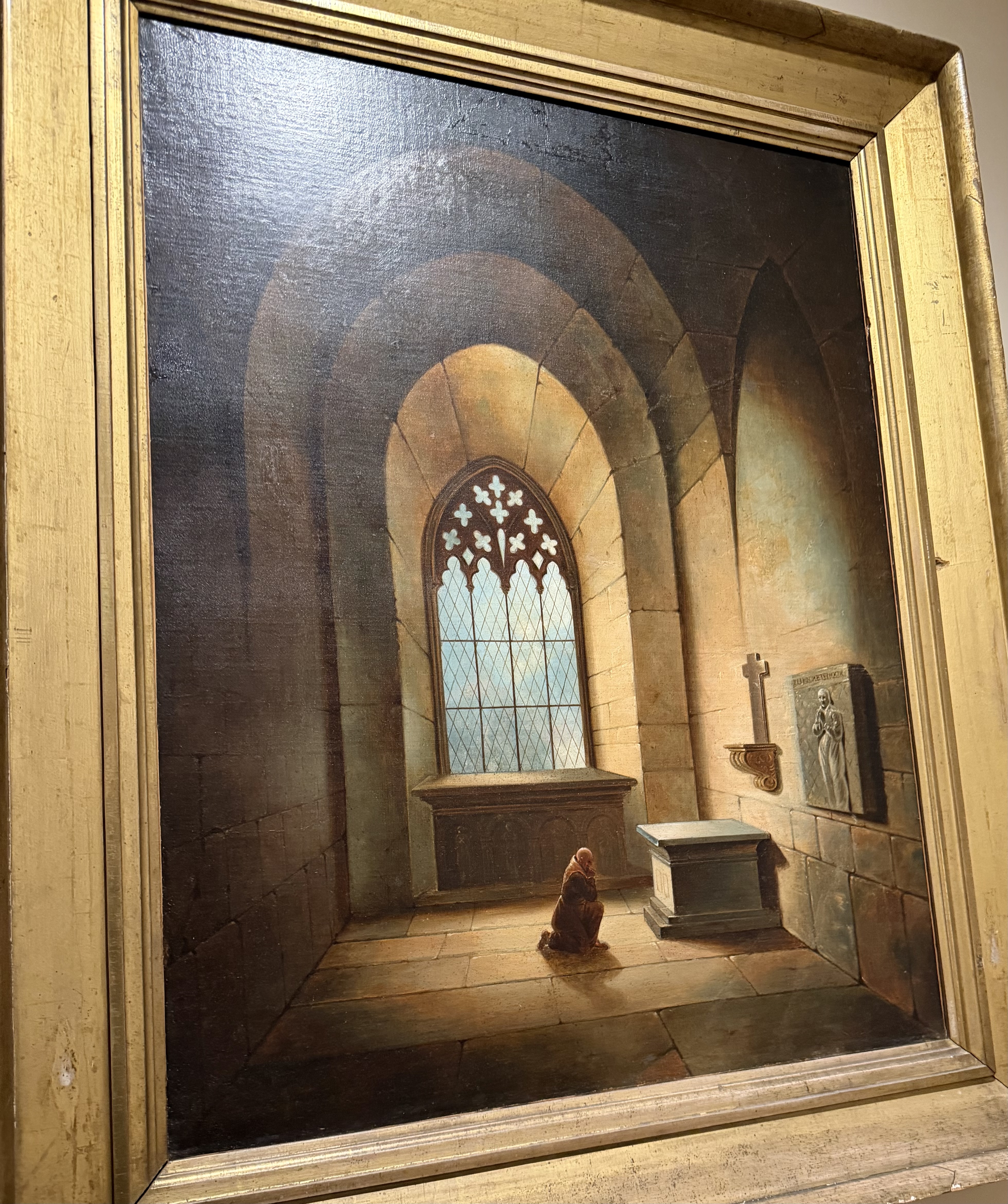
We have moved from the person of Father to the place the Father occupies, heaven. The Hebrew equivalent is the word Shamayim which is plural and actually is better suited for the designation of where God is/resides. Interesting to me is the implication that more than a GPS coordinate this place also designates status. Heaven is as much a declaration of God’s position in regards to humans as it is a location of where to find Him.
To put it complicatedly, as much as God is with us in Christ by the Spirit, conversely and perhaps controversially God is not with us, God is elsewhere, in a place up there, in a place we cannot reach unless God brings up there, here or us there. And because this place is so high above us, so out of reach for us, yet so desirable because it is the place God resides, what comes with it, is the suggestion of all positive emotions and things. Happiness instead of sadness, power instead of weakness, eternity instead of the temporality of every human experience on earth including life. Heaven is where the good times last and where God is in control.
Earth cannot make that same promise, so we pray to a Father who is God, who is at the height of power and listens to us from there.
Yet, I feel the subtle suggestion to be careful. That I do not move toward heresy with the phrase God is not with us. We could just as easily say, spiritually speaking because of Christ we are now seated with Him in heavenly places. So we are as much with God in Heaven as God is on earth with us. And I’d be curious how often we feel this bridge is built and unshaken. Even as I write this, and enjoy the act of writing in general, how near is God, the Father? How much Heaven is intermingling with the earthiness of this text?
It all feels like a sincere hope rather than a certain reality. And without jumping too far ahead, yet it is unavoidable, the prayer itself, outs our limitations. We will soon discover and be uttering in just a few lines, that the things we prayed for would be on earth as they are in heaven. In other words we are praying this way because the disconnect for Jesus and for us is so palpable, it’s undeniable. We are praying for the inevitable while unavoidably acknowledging, this is not Heaven and much of God, the good Father appears to be missing from mingling in the earth.
You might still disagree. You might see the world colored in a much more beautiful and bright way. I envy you. I envy the ability to only see the light everywhere. I want to. But I am still figuring it out.
Do I want to be in Heaven with God or do I want Heaven and God to be here with me?
I think this is an important theological question, one in which I won’t attempt to answer. I will instead mention better resources: NT Wrights, Surprised by Joy and his new book God’s Homecoming: The Forgotten Promise of Future Renewal. Brian Zahnd’s Unseen Existences. I have not read the last two, but I’m interested in the question.
Whether or not we are praying Heaven down or praying ourselves up to Heaven, the Lord’s prayer is at the least acknowledging the gap, the chasm of distance. Prayer itself is closing the gap, but the very act and need for prayer acknowledges the gap is there.
Grace is that the gap will not always be. One day, we too will be in Heaven, wherever the coordinates might be.


Leave a Reply